
If there is a brand that can make us believe in fantasy, it is certainly Schiaparelli. A house born not
from elegance but from provocation, wit, and the refusal to behave. Under Daniel Roseberry, that
instinct has sharpened into something closer to controlled excess: couture that behaves less like
clothing and more like wearable art. A relic, an homage to Elsa, a love letter to fashion. This season
in Paris, Schiaparelli did not whisper nostalgia or gesture politely toward heritage. It staged a
fantasy that felt slightly illicit, faintly dangerous, and intentionally excessive – a world where
ornament becomes narrative and the body becomes architecture. It is what is expected from
Schiaparelli, yet the looks themselves feel beyond any mortal imagination.
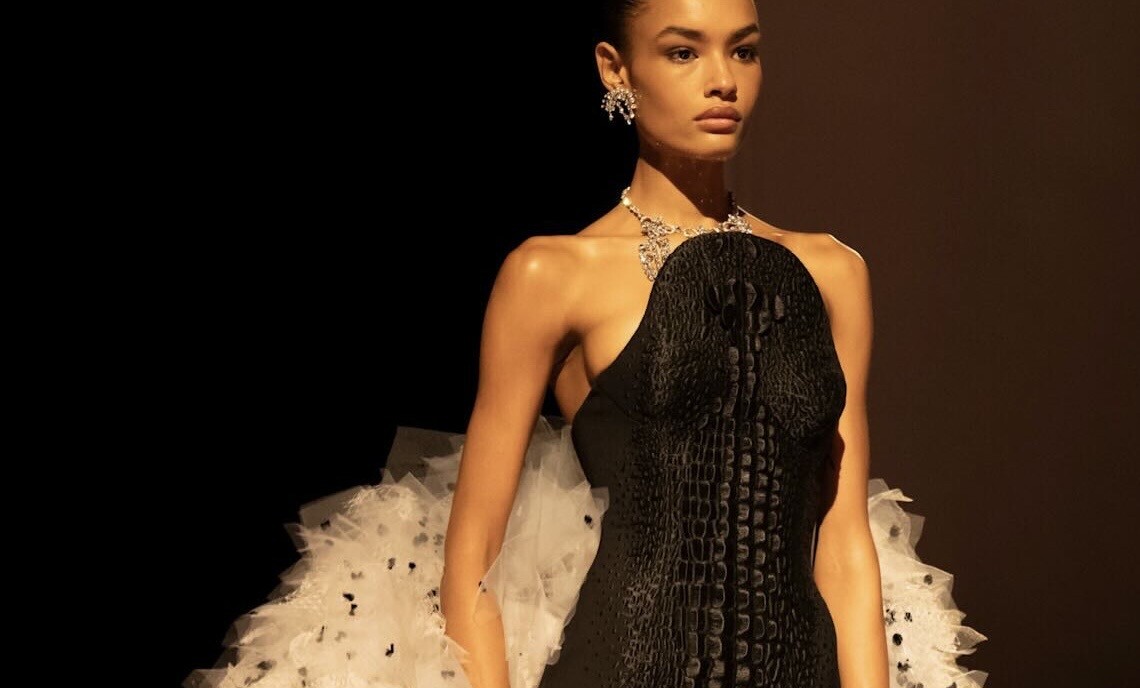
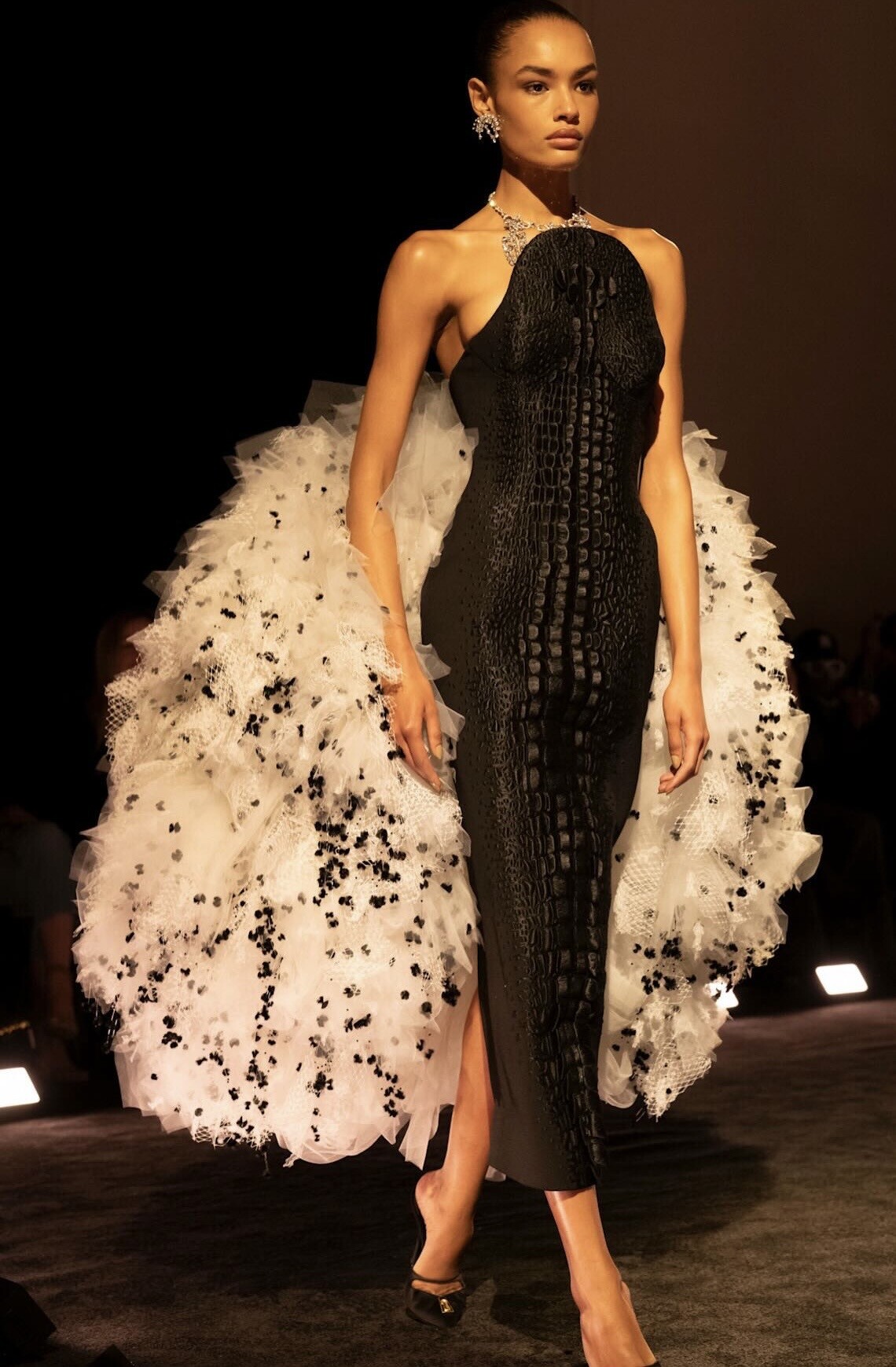
The collection unfolded like a dream that refuses to resolve itself into logic. Jewels were
exaggerated beyond function, silhouettes flirted with sculpture, and familiar codes of femininity
were stretched until they became strange again. It was couture as spectacle, but not empty spectacle.
At the heart of the collection stood a figure that felt less like a model and more like a myth: a
narrow black pencil skirt anchoring the body in classical propriety, paired with a flesh-toned bodice
blooming in delicate appliqué flowers — and rising from it, a scorpion-like tail arcing into the air,
poised somewhere between threat and fantasy. The piece carried the theatrical absurdity of
Schiaparelli’s surrealist roots, yet was executed with the seriousness of sculpture. It demanded
engineering, balance, and choreography.
This tension between elegance and unease, beauty and danger, threaded through the entire
collection. Roseberry understands that couture today must function on multiple frequencies at once:
it must seduce the eye, ignite digital circulation, and still reward close inspection. His silhouettes
begin with classical discipline — pencil skirts, corseted torsos, controlled proportions – before being
disrupted by something impossible: an appendage, an exaggerated jewel, a surreal intervention that
fractures the illusion of normalcy.
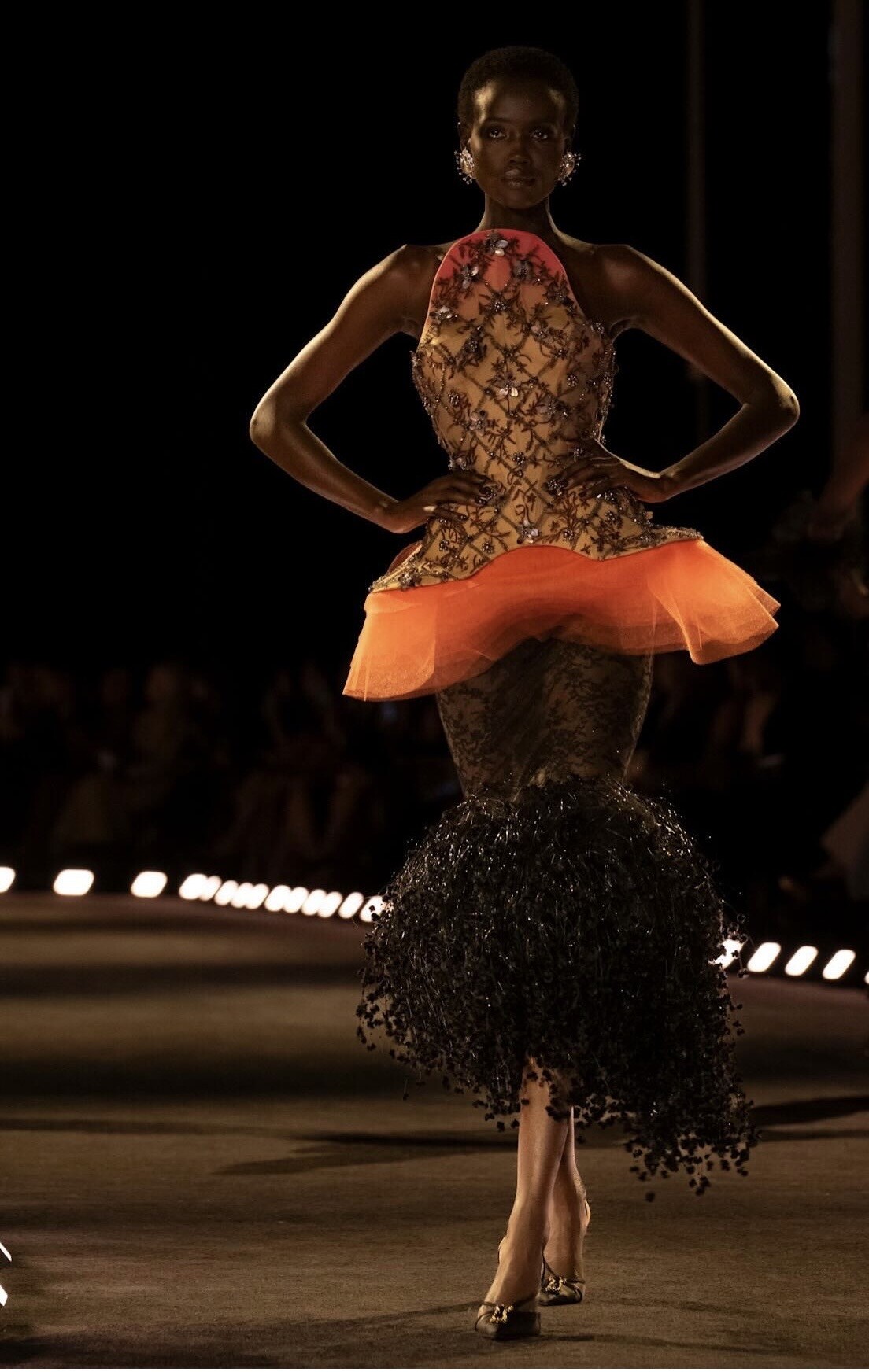
The motifs felt deliberately loaded. References to historic jewels and royal ornamentation echoed
through the collection, not as reverence, but as exaggeration. Pearls, diamonds, and metallic forms
were inflated into theatrical symbols — relics of power transformed into wearable myth. Rather
than restoring history, Roseberry distorted it, pushing luxury toward fantasy rather than
preservation. There was also a sense of courtly imagery beneath the surface: echoes of Spanish
infanta portraits, rigid silhouettes that imply control, hierarchy, and performance. Yet these
references were never romanticised. They were destabilised — innocence edged with menace,
refinement sharpened into spectacle. Even beauty here carried teeth.
Animal suggestions surfaced subtly through sculptural footwear and surreal forms, reinforcing
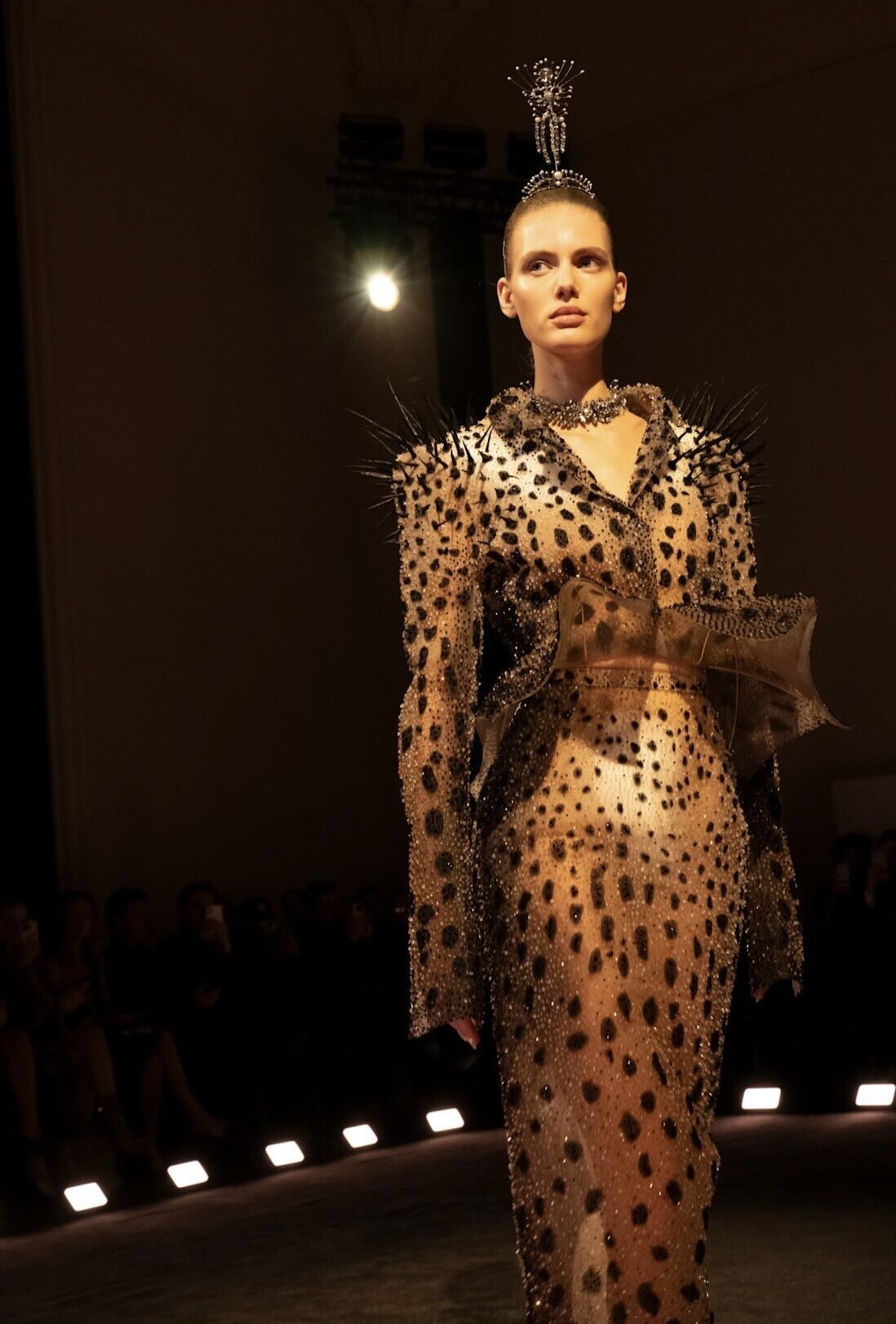
Schiaparelli’s longstanding fascination with the body as a hybrid creature. The wearer becomes
part-human, part-object, part-myth. What made the collection resonate was not simply its visual
audacity, but its emotional clarity. In a fashion climate increasingly obsessed with restraint,
minimalism, and quiet luxury, Schiaparelli offered maximalism with intelligence. Not noise for
noise’s sake, but ornament as narrative, excess as language. Where many houses are currently
whispering about refinement, Schiaparelli chooses to speak in metaphors, symbols, and theatrical
exaggeration.
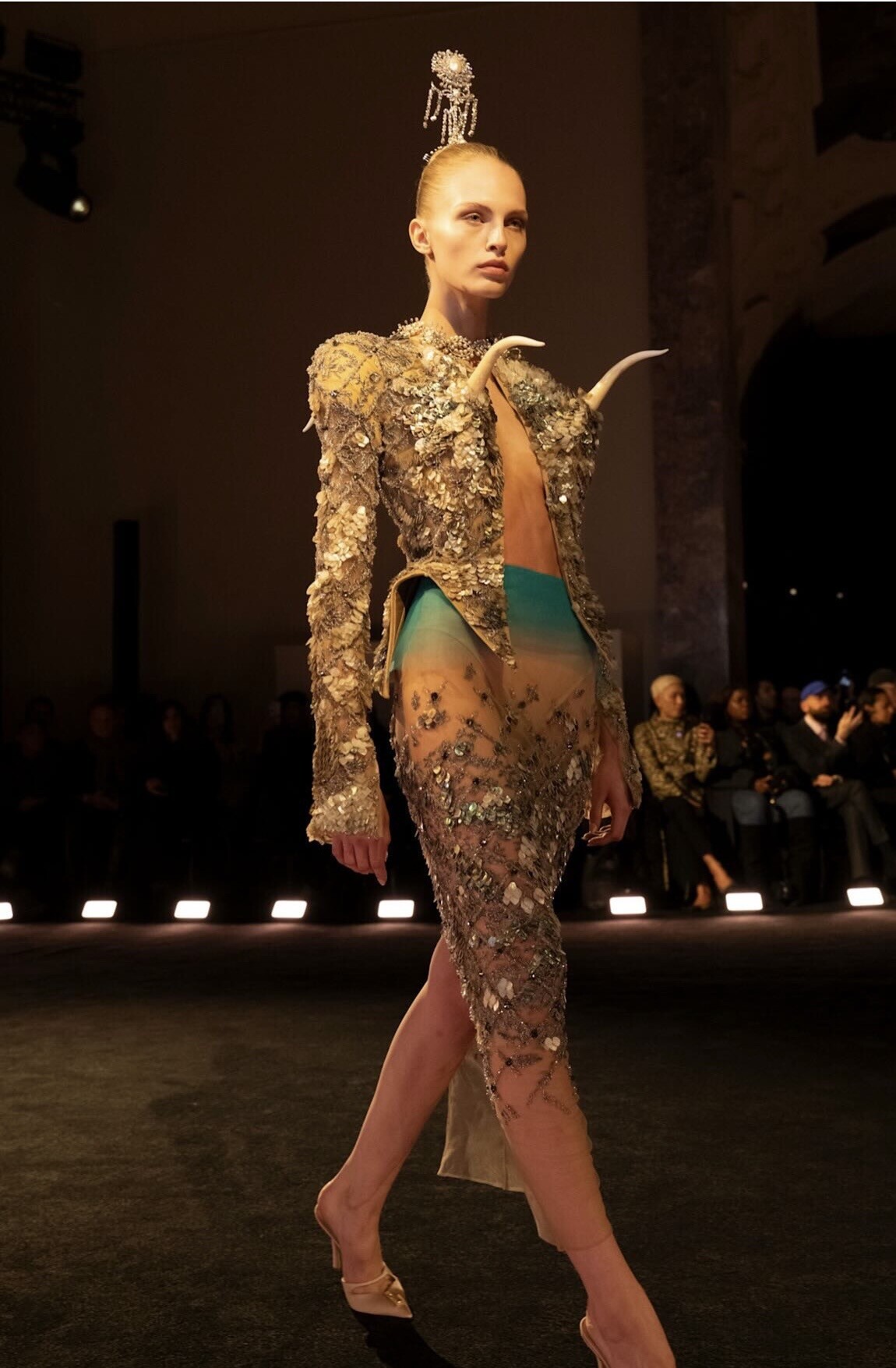
Yet even within the surreal madness, control was evident. The chaos was engineered. Behind every
dramatic gesture lived discipline: precise tailoring anchoring the silhouettes, careful weight
distribution allowing sculptural elements to exist without collapsing into costume, handwork that
elevated fantasy into craft. The house continues to demonstrate that spectacle, when properly
constructed, can be intellectually rigorous. Couture, in this context, becomes less about aspiration
and more about authorship. These garments are not designed to blend into wardrobes or trend
cycles. They exist as statements — collectable pieces meant to be passed through generations.
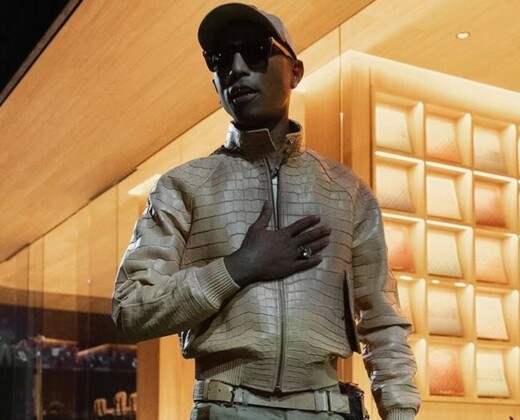
The front row amplified this logic. Celebrities arrived already wearing pieces from the collection,
collapsing runway, styling, and viral distribution into a single moment. Schiaparelli no longer waits
for editorial interpretation; it designs for immediate cultural circulation. The garment is
simultaneously couture object and media artifact.
This collection was not about wearability or seasonal relevance. It was about presence. About
creating garments that feel like encounters rather than products. About reminding fashion that
beauty can still be strange, that elegance can still provoke, that fantasy can still feel dangerous.
Schiaparelli survives and thrives through another couture season – and remains the undefeated ruler
of creativity
Watch the show here
Words by Fabianna Gutierreza