
If haute couture is a language, then Jonathan Anderson’s first couture collection for Christian Dior
spoke in a dialect of deliberate paradox – rooted in tradition yet spontaneously alive, disciplined yet
rebelliously poetic. Presented in Paris as the Spring/Summer 2026 Haute Couture debut, this was
more than a fashion show; it was a reframing of Dior’s legacy under a designer unafraid to interpret
elegance through disruption and metaphor. At the heart of the collection lay a deep respect for
Dior’s codes – but refracted through Anderson’s unique lens. He never merely resurrected the past;
he entered into dialogue with it. Where Monsieur Dior once celebrated sculpted waists and the
iconic Bar silhouette, Anderson introduced rhythm over rigidity, ambiguity over assertion, and
imagination over orthodoxy.
A Prelude of Fluidity: The Opening Look
The show opened with a silhouette that felt like breath made visible: a light, flowing dress
assembled from whisper-thin fabric that seemed to inhale and exhale with the model’s steps. This
moment set the tone for the entire collection – a couture that celebrates movement and emotional
register rather than rigid structure. The simplicity of the cut belied its complexity: this was not
minimalism but emotive restraint, an invocation of form that asks us to lean in rather than be
overwhelmed.
The Bar Jacket Reimagined: Dialogue With Dior’s Archive
The most striking motif was the reinterpretation of the Bar jacket. Dior’s enduring symbol of postwar femininity and structure. Anderson did not preserve it as a museum piece; he subverted it. In
some looks, the jacket appeared with broadened shoulders, exaggerated proportions, or softened
waists that hinted at silhouette without enforcing it. The result was less restoration and more
reinterpretation. A conversation between historical discipline and contemporary ease. These
variations felt like questions: what does authority look like if it no longer constrains? What does
refinement mean when loosened from tradition? And how does couture operate in a moment that
prizes expressive identity over coded uniformity?
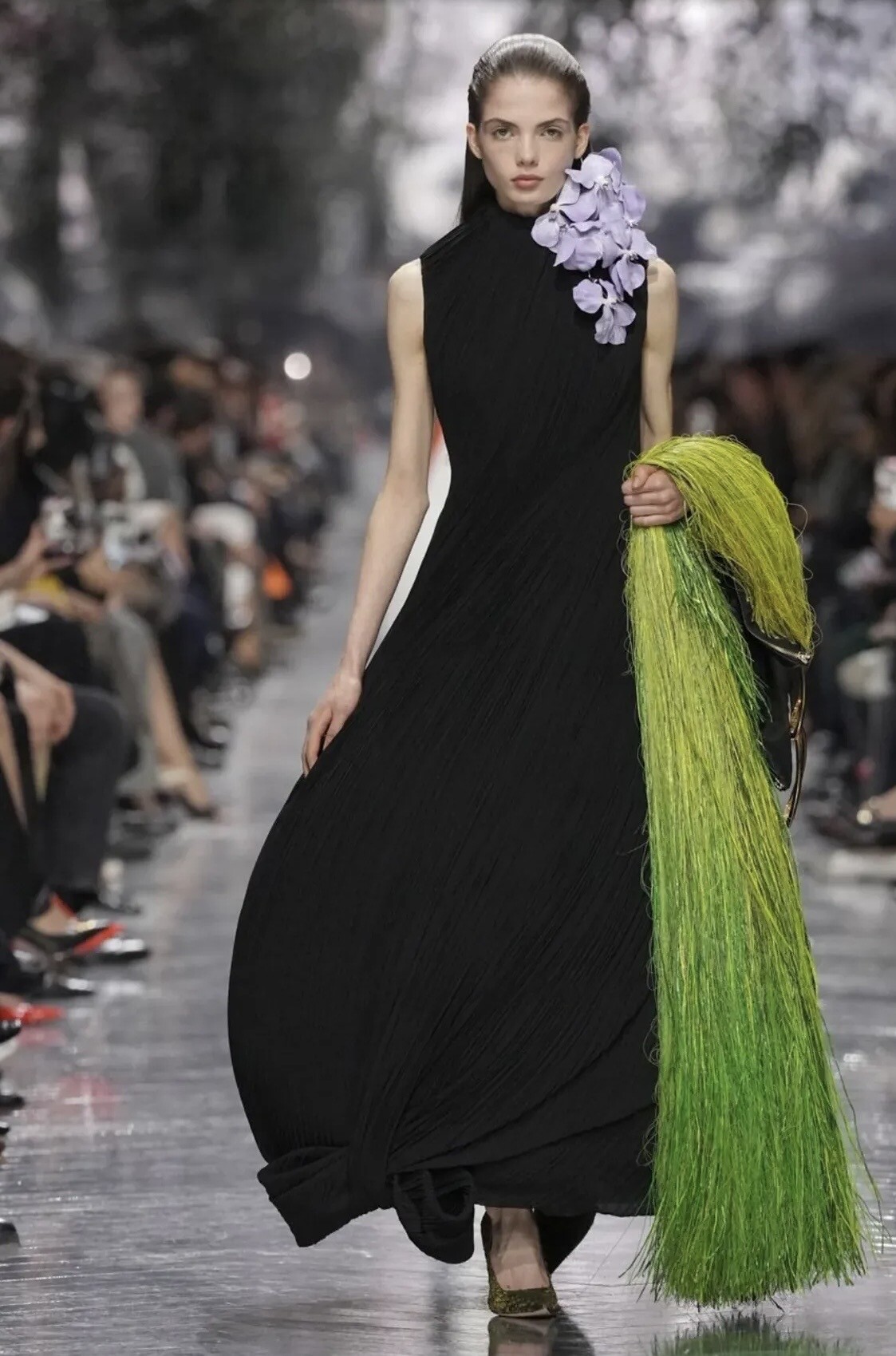
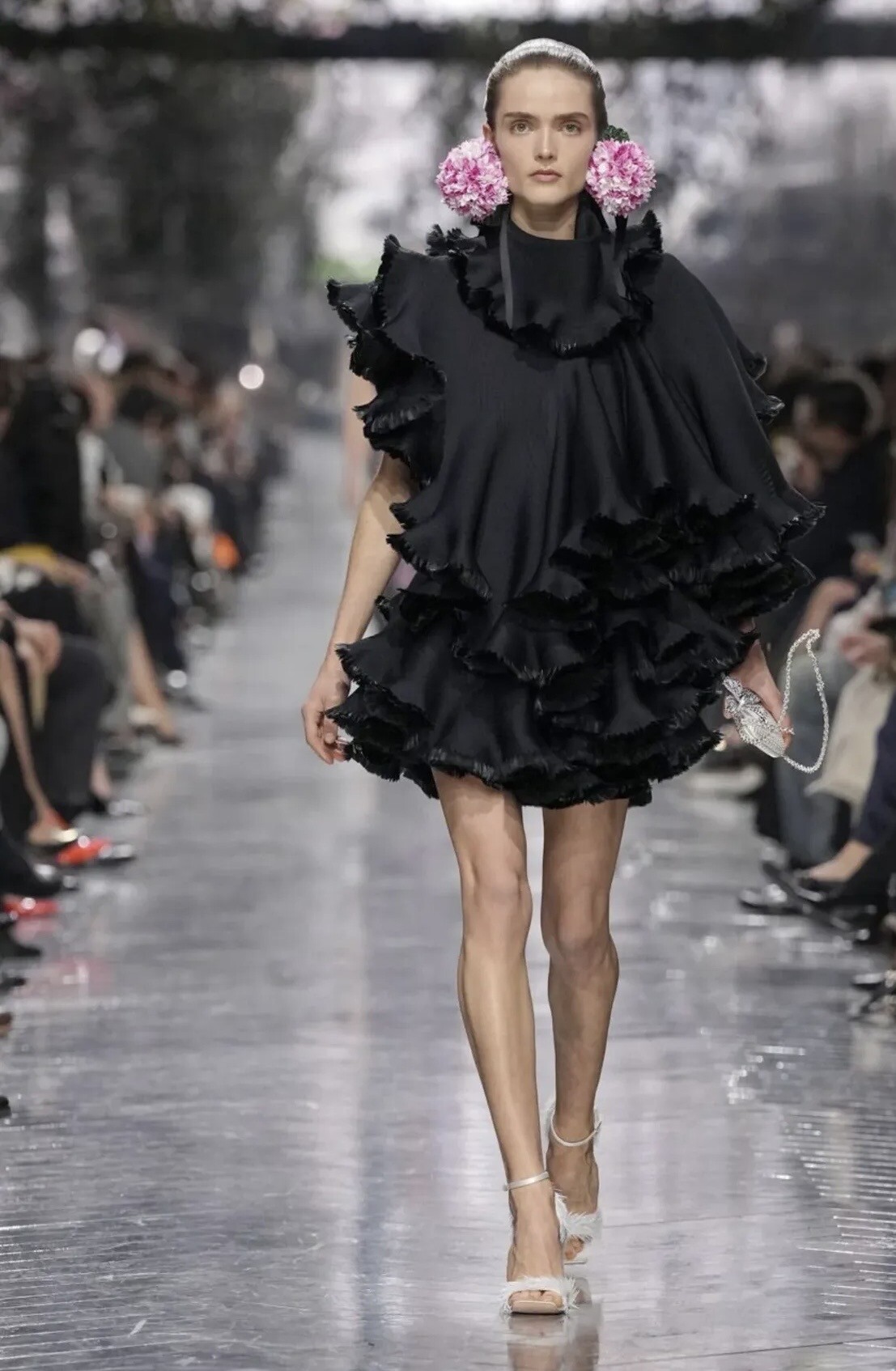
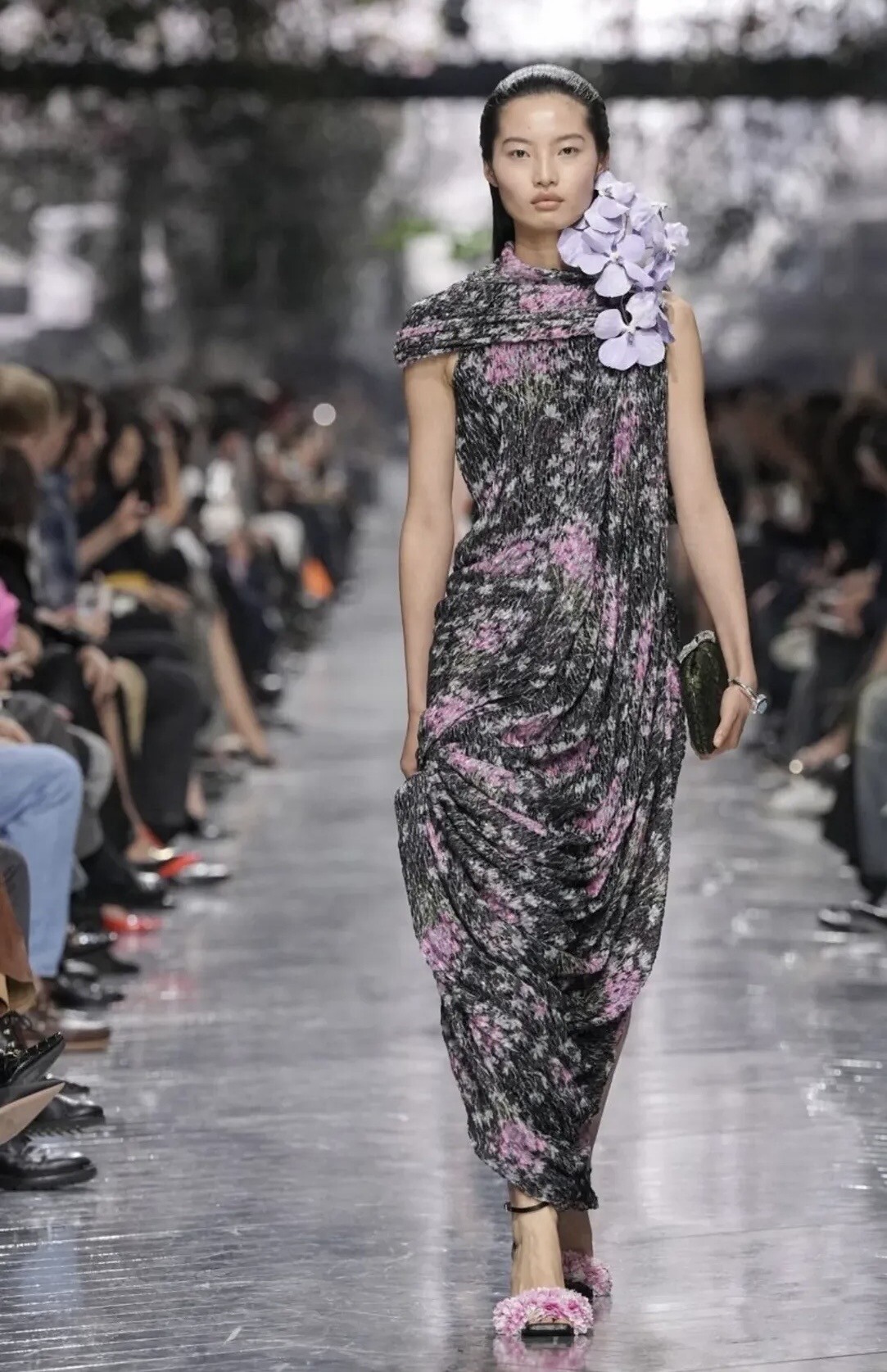
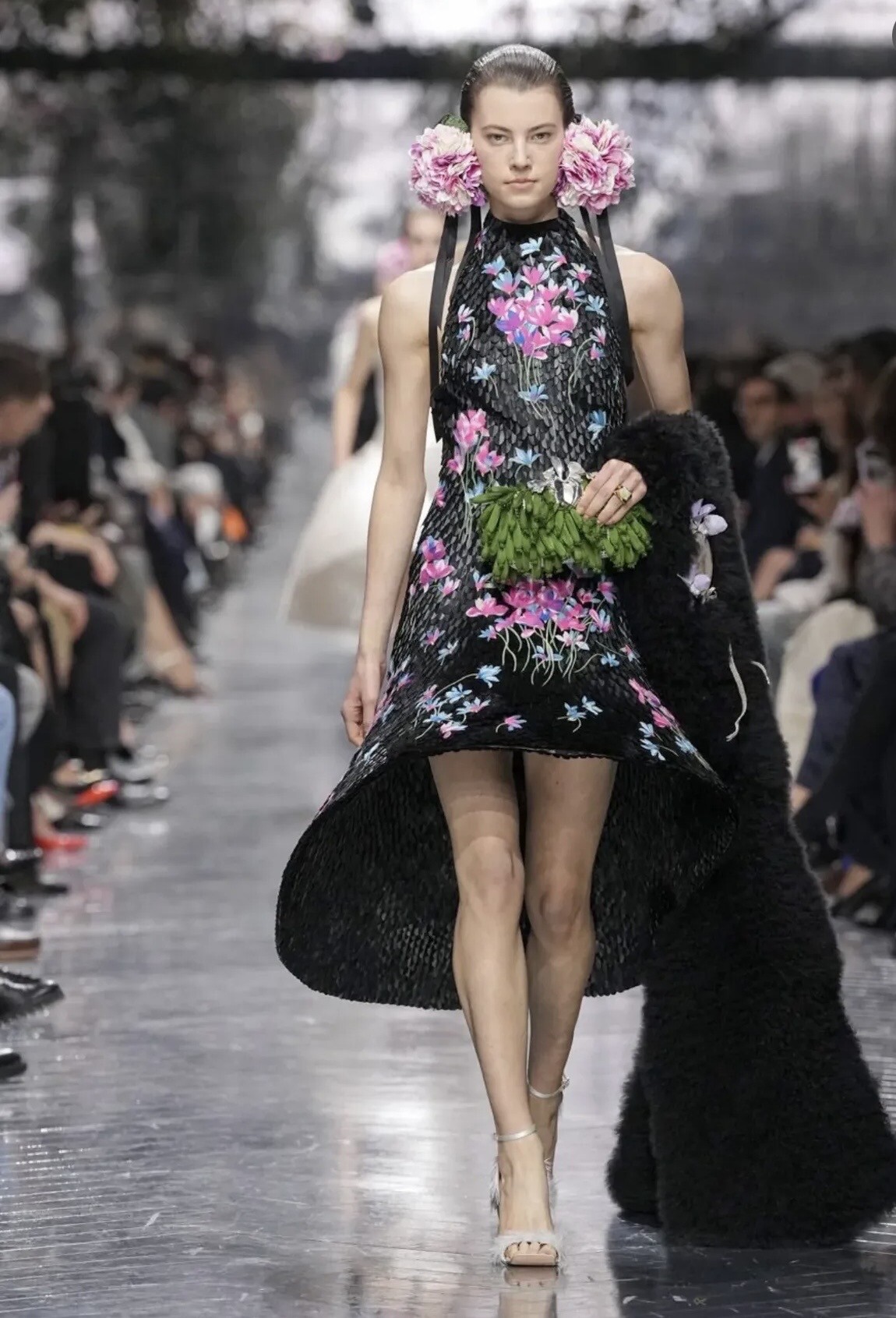
Ornament as Narrative Far from decoration, adornment became language throughout the show. Pearls were oversized, not delicate; bows – historically symbols of sweetness – reappeared as architectural punctuation, bold and slightly ironic. Metallic forms surfaced like relics repurposed into symbols of power. What could have been static adornment instead became semantics: each ornamentation conveying agency, intent, and emotional texture.
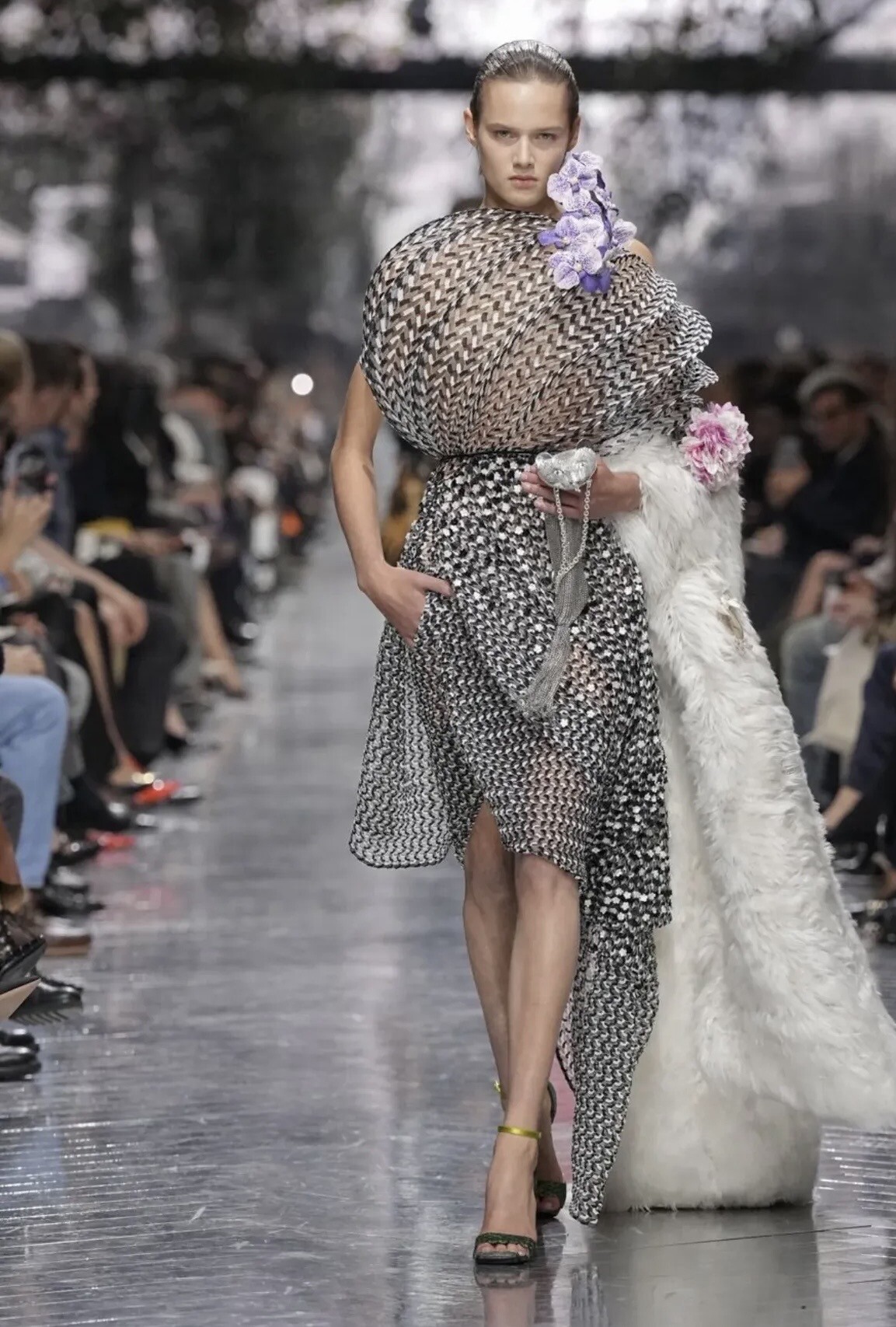
Ambiguous Bodies One of the most unforgettable threads woven through the collection was how Anderson treated the human form as something in motion: mutable, hybrid, and resonant. Sculptural elements sometimes clipped onto fluid fabrics, as if structure and ephemerality were engaged in perpetual tension. Some silhouettes encased the body in dramatic capes or extended planes that felt architectural, not merely decorative. Others gently revealed curves in unexpected ways. The tension between concealment and suggestion became deeply expressive.
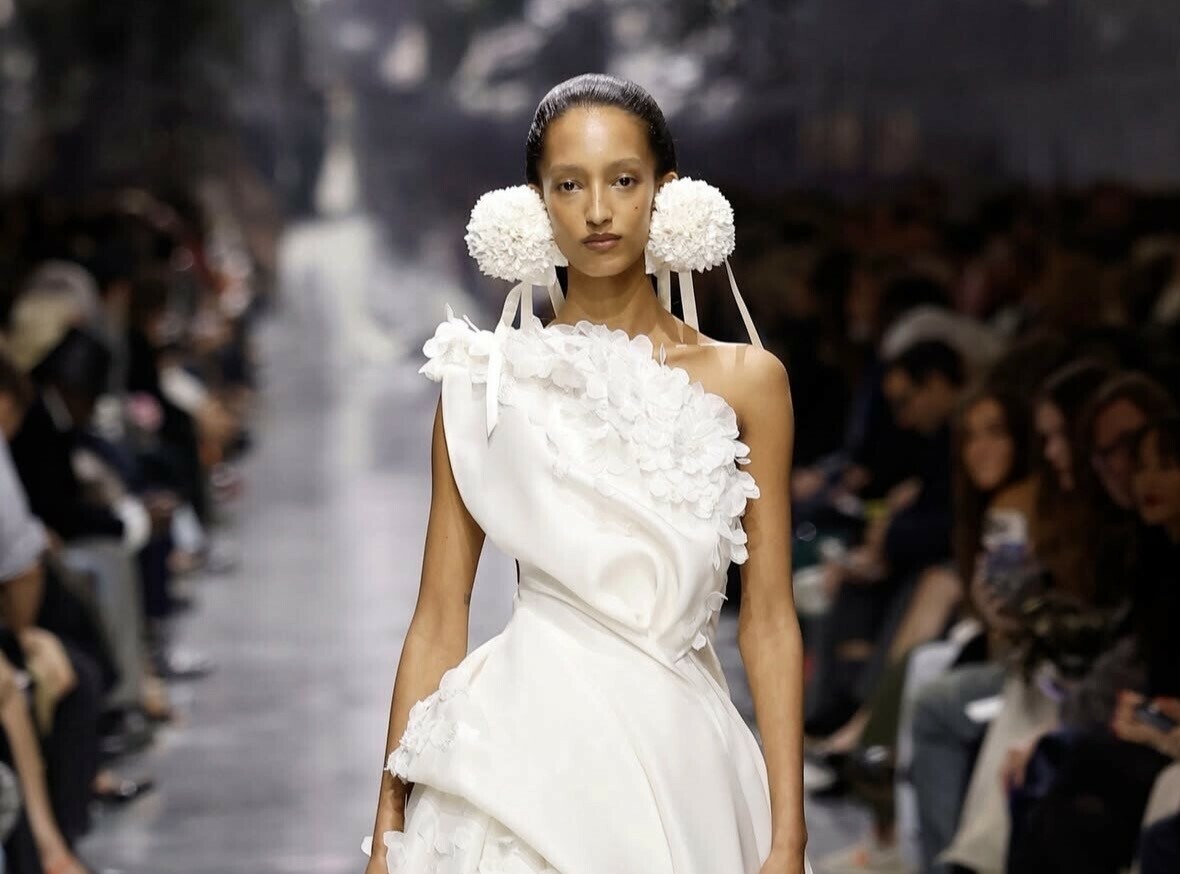
The Closing Statement: Mona Tougaard as Bridal Myth
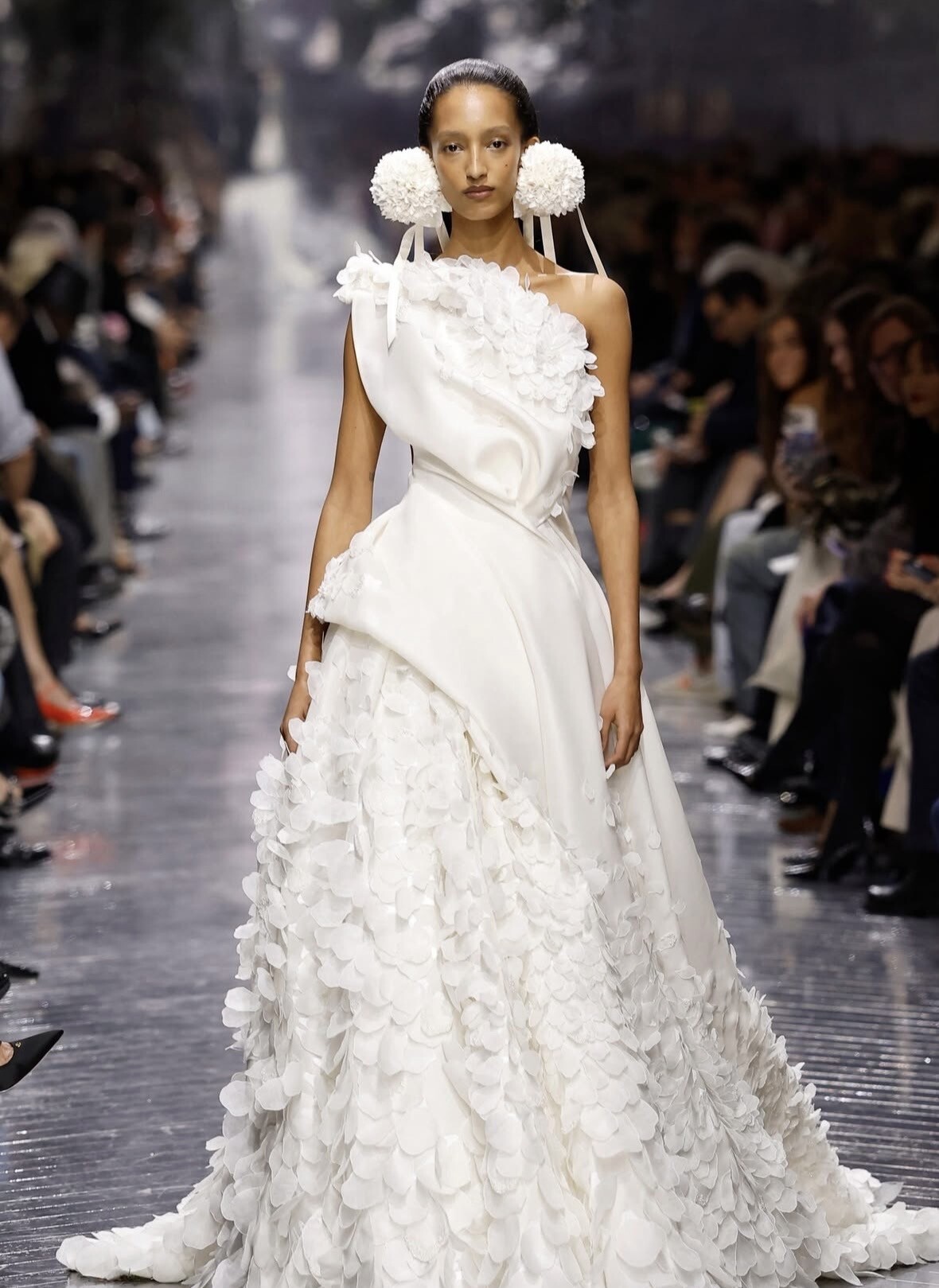
And then…the finale. The closing look was delivered by Mona Tougaard, whose walk felt less like
a runway exit and more like the unveiling of a new myth. Cloaked in a bridal-adjacent silhouette
that transcended wedding tropes, Tougaard’s look was both ceremonial and spectral – white fabric
that folded like memory itself, detailed with couture handwork that whispered of legacy and
reinvention. Her presence was deliberate: not a fleeting afterthought, but the final thesis of Anderson’s argument. In choosing a model of Tougaard’s stature and versatility – a figure whose very name evokes freedom, strength, and poetic ambiguity. Dior suggested that couture’s future is not about passive beauty but active presence. This closing look did what the entire collection whispered all along: it asked us to reconsider what couture means when its author refuses to be confined by history yet remains in deep conversation with it.
Couture, Context, and Cultural Circulation
What made this debut particularly resonant was its self-awareness: couture no longer exists solely in
hushed salons or elite ateliers; today, it moves through networks of images, screens and cultural
discourse. Anderson understood this. His silhouettes are not just garments; they are content,
arguments, metaphors – tailor-made for the digital moment without ever feeling simplified for it.
A New Dior Vision: Authority Reimagined
Jonathan Anderson’s first haute couture collection for Dior asserted something decisive: the house’s
authority is not located in replication, but in re-imagination. It is a couture that listens as much as it
speaks, that questions as much as it adorns.
This was not a debut born of uncertainty but of confidence. A bold vision that respects tradition
without being bound by it, and that finds poetry in paradox. In doing so, Anderson has not merely
dressed couture; he has opened it – to possibility, to contradiction, to a future that remains undecided
yet compelling. In this moment, Dior does not look backwards. It looks outward.
Watch the full Dior Haute Couture Show Here 2026
Words by Fabianna Gutierreza