
On February 28, 2026, under the soft Mediterranean light of Monaco’s Le Rocher, Charles Leclerc
and Alexandra Saint Mleux chose intimacy over extravagance, a civil ceremony that felt less like
a Formula 1 headline and more like a European art film. However, despite their secrecy, still made
headlines due to its beauty and dream-like nature.
Monaco as Myth
To marry in Monaco is to understand symbolism. The principality is not just Leclerc’s home, it is a
fairytale of Glamour without excess. Wealth without ostentation. History without dust. The
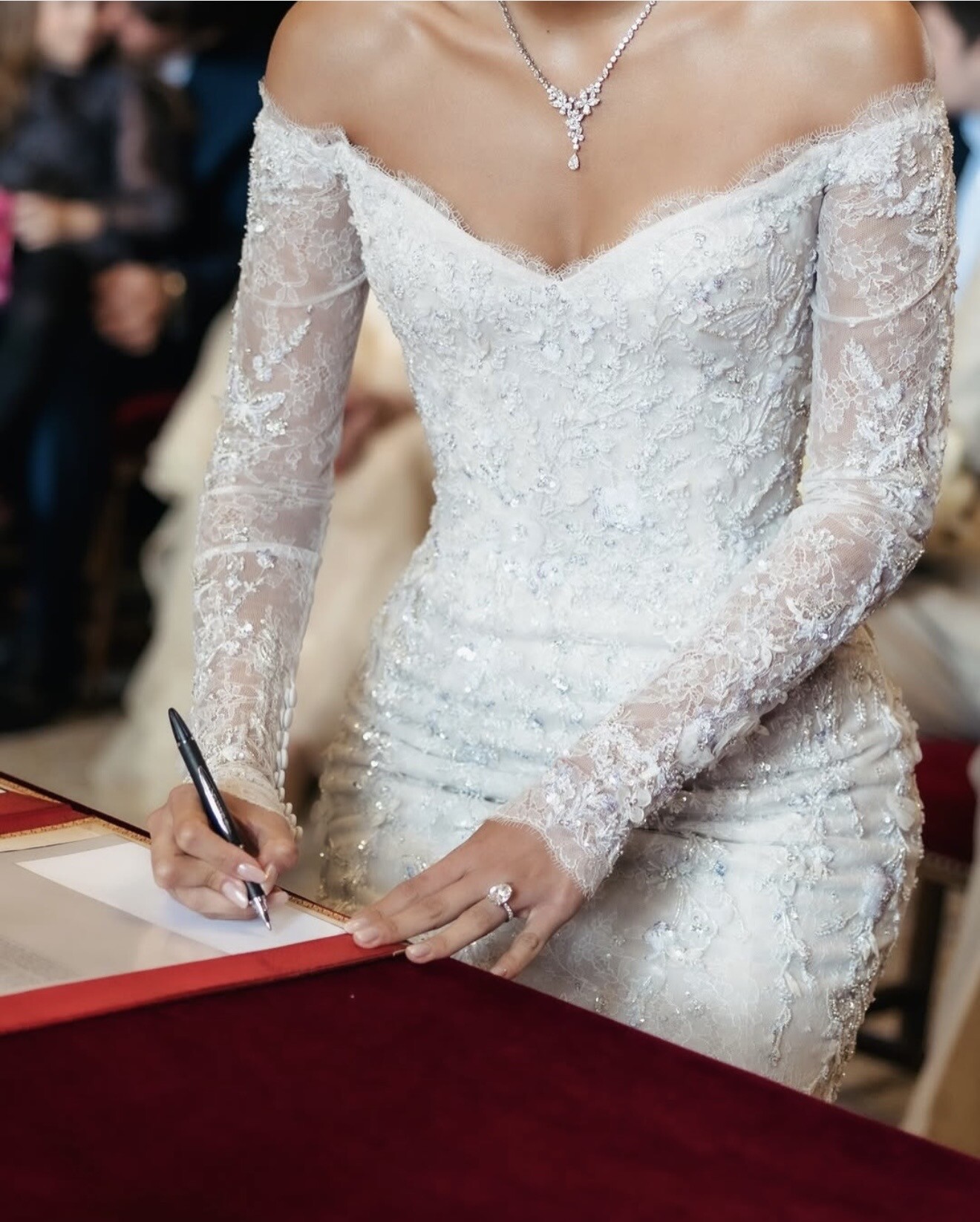
ceremony took place at the Mairie de Monaco, the town hall perched above the port in the old
town. It is the same space where generations of Monégasque unions have been formalised —
dignified, civic, restrained.
Nevertheless, nothing about the day felt ordinary.
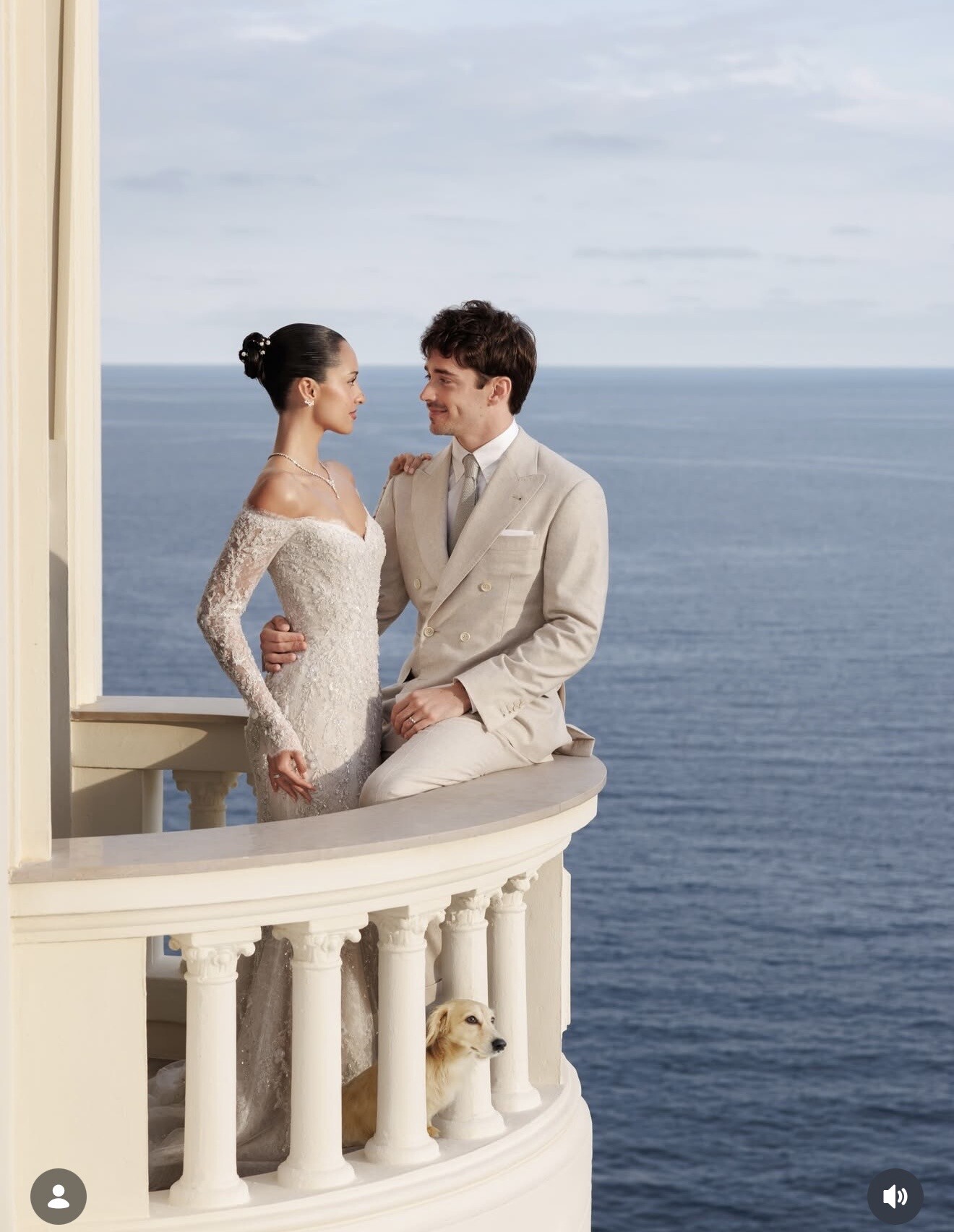
After the ceremony, the couple retreated to Villa La Vigie, the legendary Belle Époque estate
overlooking the Riviera. Once associated with Karl Lagerfeld, the villa is synonymous with discreet
European opulence. Terraces spilling into sea views, pale stone warmed by salt air, a backdrop that
requires no theatrical enhancement. If Monaco is myth, La Vigie is cinema.
The Return of Civil-Ceremony Chic
In a year when celebrity weddings have leaned maximal: cathedral trains, destination pageantry,
multi-day festivals — the couple’s choice of a civil ceremony feels culturally precise. It taps into
the ongoing shift toward quiet luxury bridal: heritage over hype, craft over spectacle.
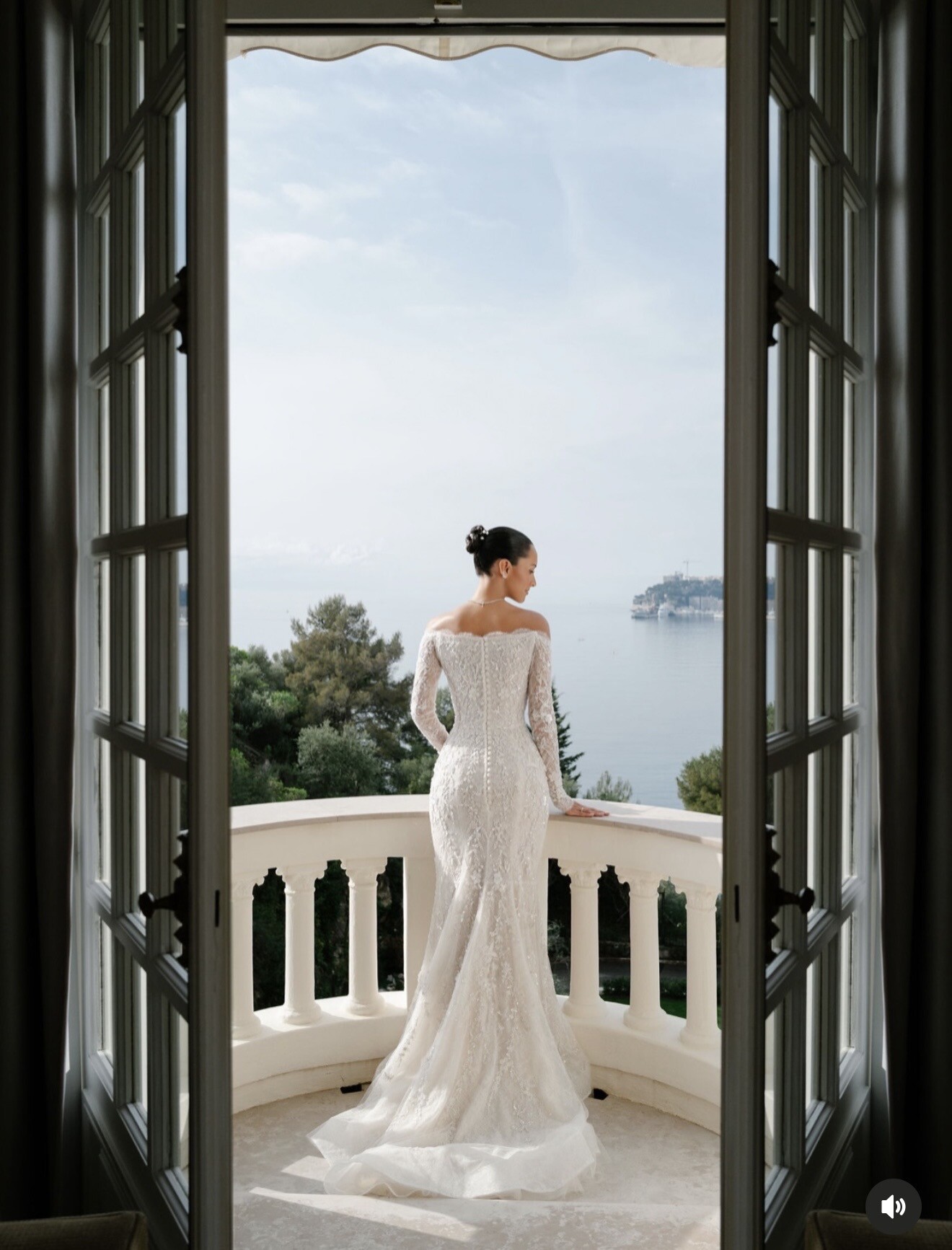
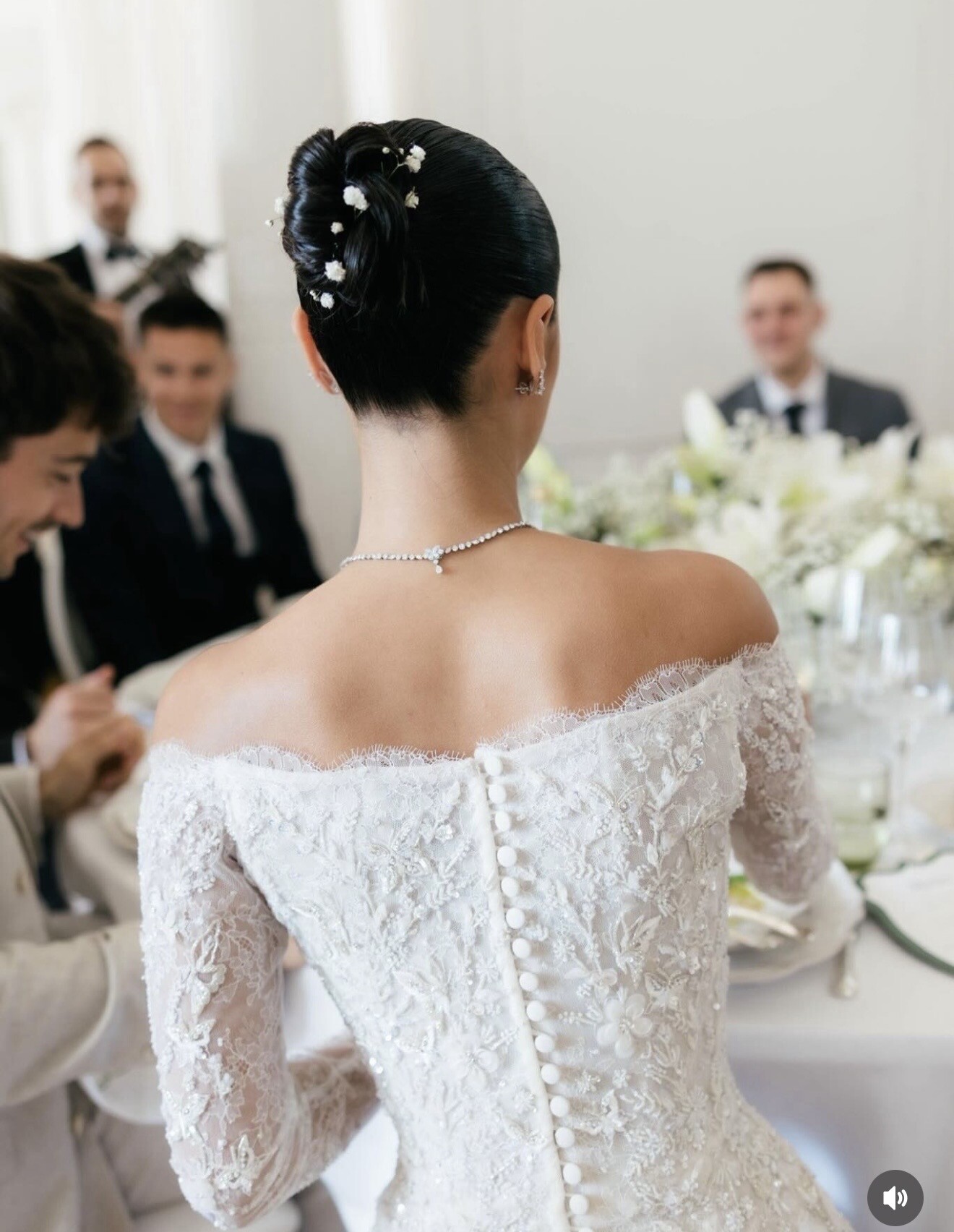
Her gown, custom Paolo Sebastian couture, embodied this philosophy. French Chantilly lace
cascaded across a fitted silhouette with an off-the-shoulder neckline and long sleeves. From afar, it
read classic. Up close, it revealed intricacy — delicate embroidery, romantic texture, a line of
buttons trailing down the back like punctuation.
Graff Diamonds and Riviera Light
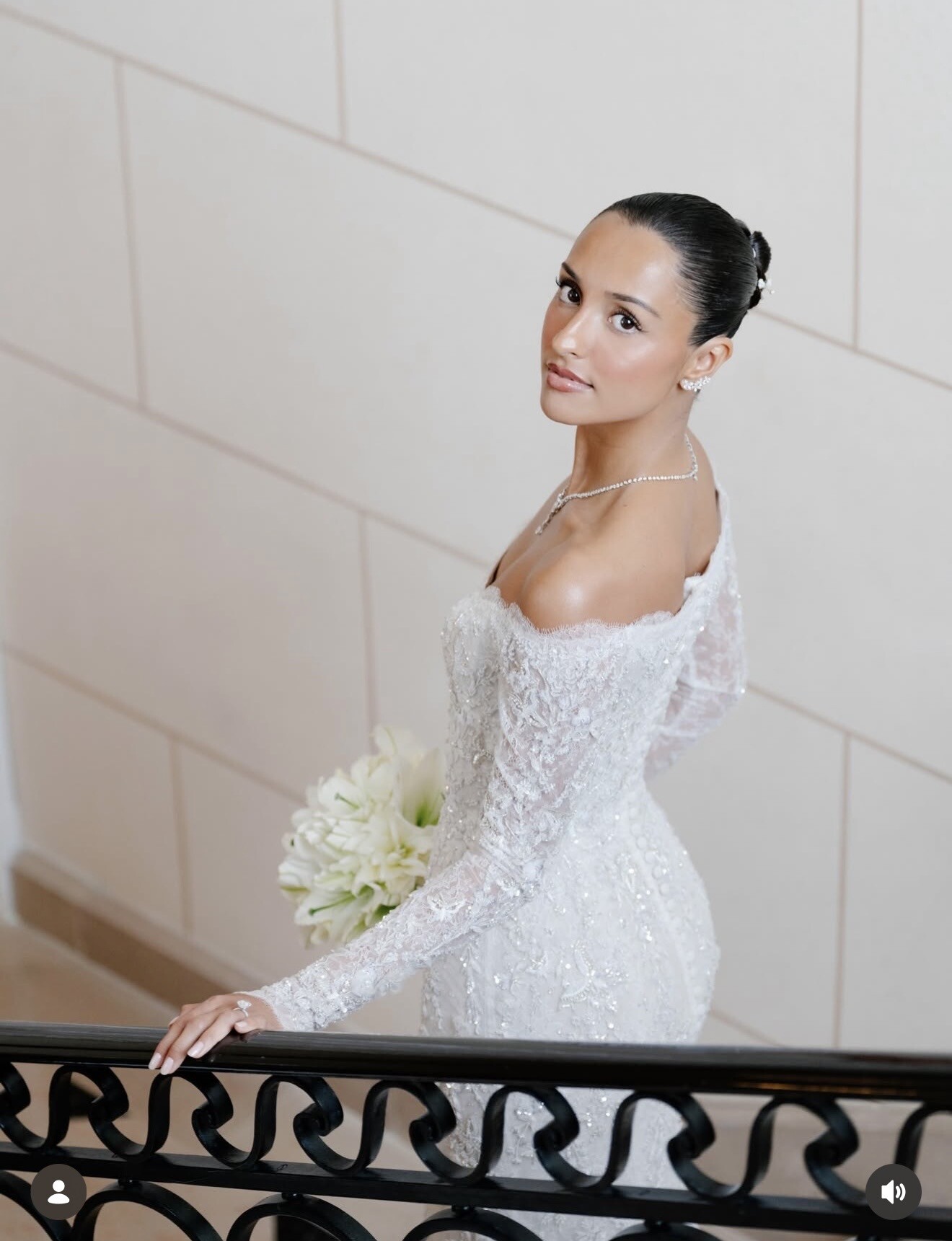
Jewellery can shift a bridal narrative from sweet to sovereign. Alexandra’s choice of Graff did
exactly that. The diamonds were luminous but controlled — a necklace and coordinating earrings
that framed the lace without overwhelming it. Graff is known for stones that feel architectural rather
than decorative; here, the pieces acted as structural punctuation against softness. The result was
balance: couture delicacy anchored by diamond precision.
Beauty Without a Team
Perhaps the most telling detail of the day: Alexandra did her own makeup. The finish was radiant
but not contoured into anonymity. Skin remained skin. The palette stayed neutral, romantic,
personal. Her hair was styled into a sleek chignon, adorned with baby’s breath instead of a
traditional veil — a gesture toward softness that felt European rather than theatrical. There was no
attempt to transform her into a bride archetype. She remained recognisably herself.
The Groom: Riviera Formality
Leclerc matched the mood in a cream-toned suit paired with a grey tie — sharp but not severe. It
aligned with Monaco’s tonal palette: ivory stone, pale sand, Mediterranean light. There was no
overt branding moment, no logo-led tailoring. Just clean lines and proportion. In a wedding built on
subtle codes, even the menswear understood the brief.
A Ferrari Exit, Because of course
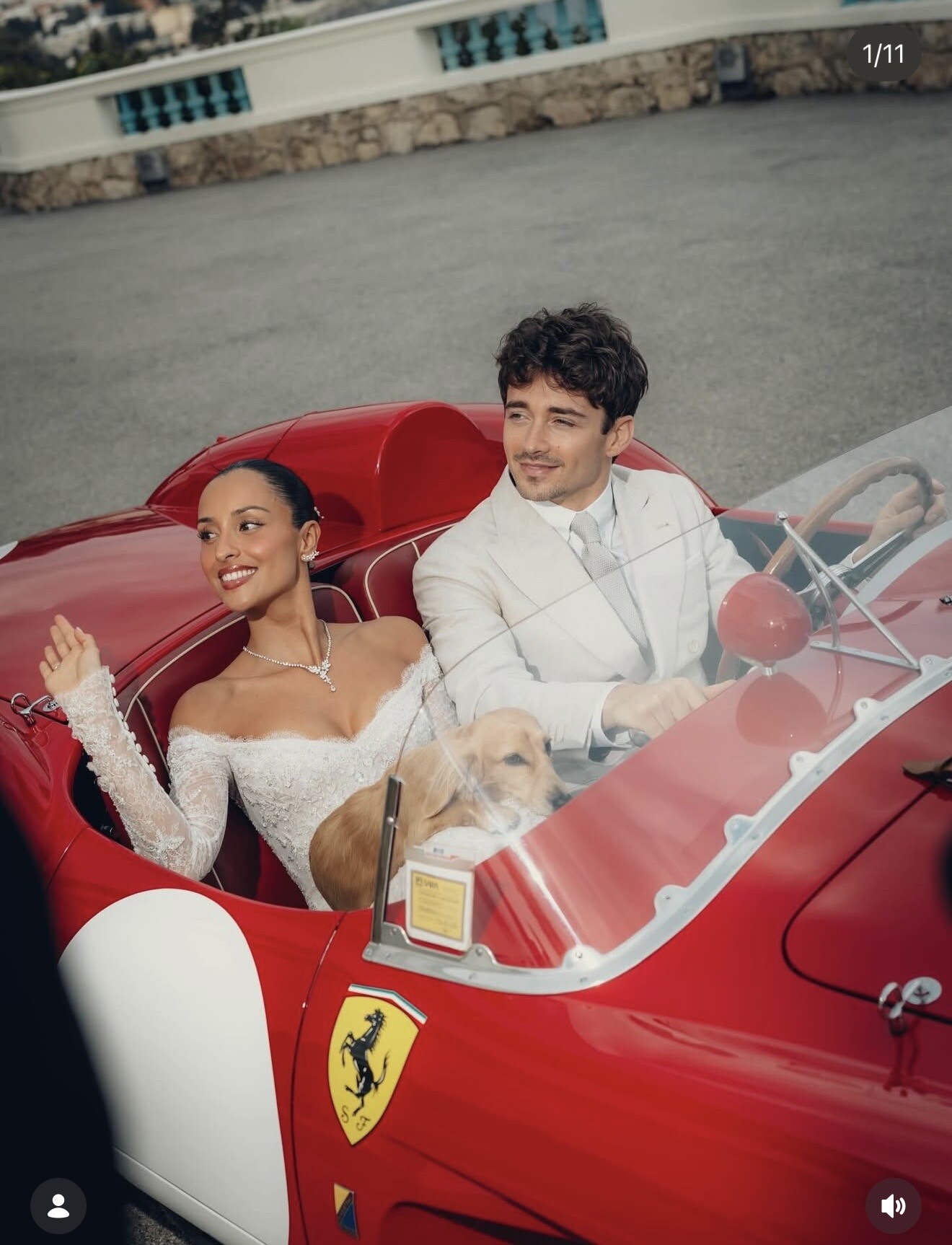
No Leclerc wedding would be complete without machinery — but even this was curated with taste.
The couple departed in a 1957 Ferrari 250 Testa Rossa, an icon of automotive design. The car did
not read as flex. It read as heritage: a vintage artifact echoing the same narrative arc as the lace, the
villa, the town hall.
The Guest List That Wasn’t
Unlike most celebrity weddings, there was no publicised roll call. Reports confirm the presence of
close friends and family only. No spectacle seating. No influencer grid. This was not a red carpet
disguised as a wedding. It was a private chapter made visible only on the couple’s terms. The
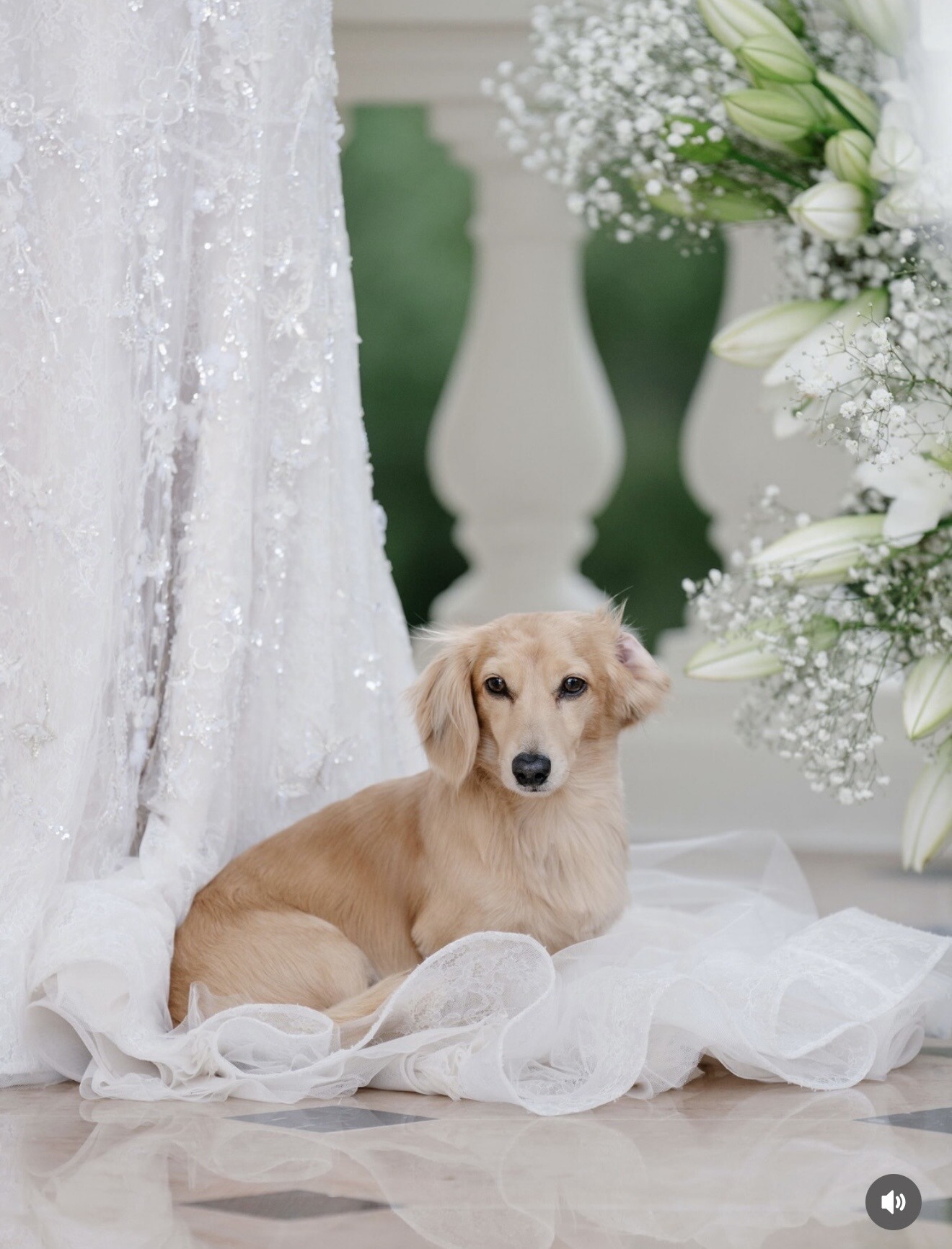
Leclerc brothers and, Leo, the mini dachshund, were the only confirmed celebrity guests – who also
served as groomsmen.
The Cultural Shift
This ceremony lands at a precise moment in fashion culture. We are witnessing a retreat from overt
display toward curated intimacy. Civil ceremonies are reclaiming power. Couture is being chosen
not for virality, but for craftsmanship. Luxury is becoming quieter — not cheaper, not smaller —
but more intentional. Alexandra and Charles’ wedding embodies that shift.
It suggests that the new bridal iconography is less about spectacle and more about setting. Less
about transformation and more about identity. The most powerful detail of the day may not have
been the lace, the Graff diamonds, or the Ferrari. It was the editing. Every image released felt
deliberate. Every frame cinematic. Every detail restrained enough to leave room for imagination.
And perhaps that is the ultimate luxury in 2026: control over the narrative.
The couple has already hinted this civil ceremony is “part one.” A larger celebration may follow.But
if this was only the prelude, it has already accomplished something rare. It made restraint look
radical and desirable.
Words By Fabianna Gutierrez