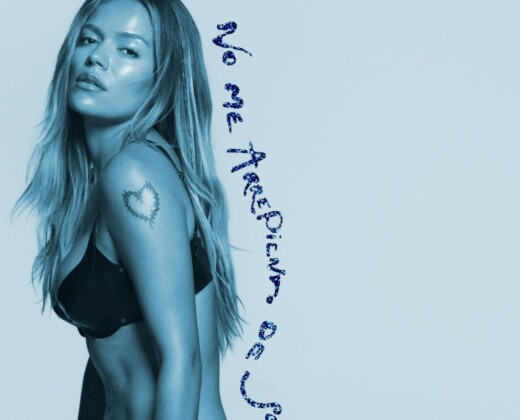


Discovered at just 13 years old after Justin Bieber shared one of her YouTube covers, Madison Beer has spent more than a decade growing up in public. What began as a viral co-sign evolved into a slow-burn career — one shaped by scrutiny, reinvention, and an unwavering commitment to finding her own voice.

Now, with Locket, her third studio album, Beer steps fully into her power. The project marks a creative and emotional turning point, blending polished pop production with a striking sense of vulnerability. It’s also a milestone moment commercially: this month, her music finally entered the Billboard Hot 100, a long-awaited recognition that feels less like a debut and more like a deserved arrival.
The album’s standout track, Bittersweet, captures the ache of post-breakup clarity with disarming honesty. Plush and melancholic, the song traces the emotional whiplash of heartbreak — sadness, acceptance, and self-respect — without ever tipping into self-pity. When Beer sings about choosing truth over denial, it lands as a quiet declaration of growth, not just as an artist, but as a woman.
Across Locket, Beer stretches herself both lyrically and vocally. The album plays like a diary of modern love — intimate yet cinematic. Tracks such as “angel’s wings” wrap pillow-talk intimacy in glossy electropop textures, while “complexity” leans into glitchy synths and emotional confrontation, urging a lover to meet her at her level. Elsewhere, “bad enough” pairs explosive production with raw feeling, proving Beer’s ability to balance pop maximalism with emotional depth.
Behind the scenes, Beer also takes creative control. Co-producing much of the album, she positions her voice as the emotional anchor — soft, precise, and increasingly confident — floating atop layered electronic arrangements that feel both contemporary and timeless.
The closing track, “nothing at all,” is a masterclass in release. As frenetic dance beats build beneath cascading vocal runs, Beer’s voice multiplies, collides, and eventually dissolves into the surrounding synths — a sonic metaphor for catharsis. It’s an ending that feels intentional, symbolic, and earned.
Long a pop culture fixture — from her own TMZ tag to appearances on RuPaul’s Drag Race — Madison Beer has often been more visible than heard. Locket changes that narrative. This is not the story of a former viral prodigy chasing relevance, but of an artist who took her time, did the work, and emerged with something real to say.
We see Locket as Madison Beer’s most self-assured chapter yet — a clear-eyed, emotionally fluent pop record that confirms what fans have long known: she’s no longer becoming an artist. She is one.